

Most retirees spend their energy worrying about benefit cuts or COLA disappointments. They track congressional hearings and refresh SSA.gov looking for news. What they rarely prepare for is the threat that arrives quietly, with a professional logo and a sense of urgency, in their email inbox — days before a scheduled payment.
That is exactly what happened to Estelle Ramos. I found her through a Facebook group for retirees in the Southwest, where she had posted a cautionary message in late March that stopped me mid-scroll. I reached out via direct message the same afternoon, and she agreed to talk the following day.
A Warehouse Supervisor With a Tight System — And a Near-Miss
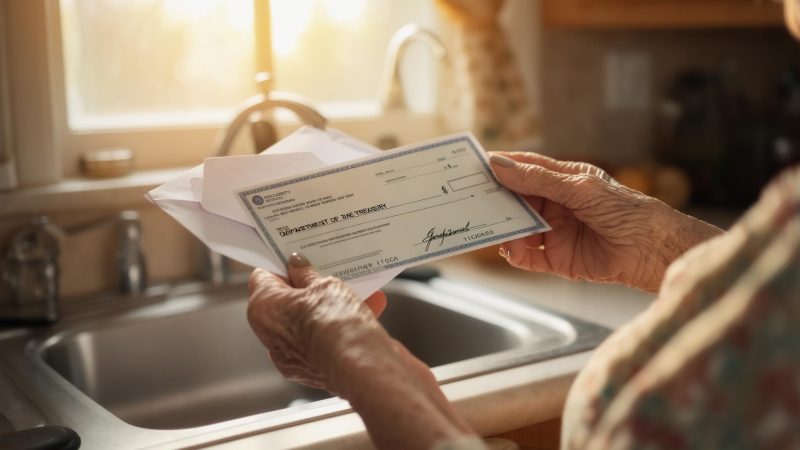
When I spoke with Estelle Ramos, 66, at her kitchen table in Albuquerque, New Mexico, she was nursing a cup of coffee and had a yellow legal pad in front of her with a handwritten budget grid. She has been a warehouse supervisor for most of her adult life — the kind of person who builds systems, tracks numbers, and does not leave things to chance. She started receiving Social Security retirement benefits in early 2025 after scaling back her hours due to fatigue, while her husband continues to work part-time.
Their household income is comfortable by most measures, but the word “comfortable” comes with asterisks. Estelle’s small side business — reselling vintage industrial equipment — has seen revenue drop steadily over the past 18 months, from roughly $2,400 a month at its peak to under $800 a month by March 2026. Her Social Security benefit, approximately $1,740 per month after Medicare Part B premiums are deducted, has become a load-bearing pillar of the family budget. She has two children, ages 11 and 3. The math is tight.
Estelle told me she tracks her payment date every month without fail. Her birthday falls on the 14th of the month, which places her in the second payment group under the SSA’s birth-date-based schedule. According to SSA.gov’s retirement benefits payment calendar, beneficiaries born between the 1st and 10th receive payments on the second Wednesday of the month — but for April 2026, that date landed on April 8. Estelle had it circled on her legal pad.
The Email That Looked Exactly Right
Three days before that circled date — on April 5, a Sunday evening — an email landed in Estelle’s inbox. The subject line read: “Action Required: Verify Your Direct Deposit Information to Receive Your April Benefit.” The sender name displayed as “Social Security Administration.” The logo looked legitimate. There was even a case reference number.
“I was tired,” Estelle told me. “I’d been on my feet all day with the three-year-old, and I sat down to check email before bed. When I saw SSA in the sender line, my first instinct was to click. My heart kind of jumped, because you think — what if my deposit is delayed?”
She paused before clicking. She is not sure exactly why. She said it was something about the timing — she had never received an SSA email on a Sunday night before — and the phrase “verify your direct deposit information” felt off. She closed the email, opened a separate browser window, and went directly to SSA.gov instead of clicking any link.
What she found on SSA.gov confirmed her instinct. The SSA’s official scam protection page included a prominent warning: the agency had seen a significant increase in imposter scam emails — fraudulent messages falsely claiming to provide access to benefits or requesting account verification. The SSA’s Office of Inspector General had issued a formal alert about this pattern in February 2026, and the warnings were amplified again in early April, timed precisely around the month’s payment disbursement cycle.
The April 2026 Payment Schedule — What Estelle Was Actually Waiting For
April 2026 represents a return to a clean, standard payment calendar after months of holiday-adjacent schedule shifts. For the roughly 74 million Americans who rely on Social Security retirement, disability, or survivor benefits, April’s three Wednesday payment dates are as follows:
Estelle’s birthday is the 14th, which places her in the April 15 group — not April 8, as she initially thought. When I gently raised this during our conversation, she looked down at her legal pad, then back up. “Well. Now I know why that email got my attention,” she said with a short laugh. “I had the wrong date written down. Which means I was already anxious, and that email found me at exactly the right moment.”
The scammers, whether by design or coincidence, had timed their outreach around the April 8 disbursement — one of the busiest payment days of the month. According to reporting from AL.com’s April payment schedule coverage, fraud attempts are deliberately timed to coincide with benefit disbursement windows when recipients are most alert and most anxious about their money.
What the 2026 COLA Actually Did to Her Check
Beyond the scam scare, Estelle’s financial situation in 2026 has been shaped significantly by the 2.8% Cost-of-Living Adjustment that took effect in January. According to SSA.gov’s COLA information page, the 2.8% adjustment applied to approximately 75 million Americans receiving Social Security and SSI benefits beginning with January 2026 payments.
For Estelle, the adjustment added roughly $47 to her gross monthly benefit before Medicare Part B premiums. She was clear-eyed about what that meant in practice.
Her frustration is shared by millions. National surveys indicate that if automatic benefit cuts were to occur, 73 percent of Social Security recipients say they would struggle to pay monthly bills, and 68 percent would cut back on food or groceries. Estelle is not in immediate danger of either — her household income remains above median — but the psychological weight of watching her business revenue decline while managing two young children on a fixed benefit structure is real and constant.
The Outcome — And What Estelle Did Next
Estelle did not click the email. She forwarded it to the SSA’s OIG complaint system and deleted it. Her April 15 deposit — her actual payment date — arrived without issue. But the episode left something behind that dollar amounts cannot fully capture.
“I called my sister in Tucson the next day,” Estelle told me. “She’s 71, on a fixed income, not as comfortable with computers. I walked her through exactly what to look for. Because if I almost clicked it — and I’m the person who does the spreadsheets — she could absolutely click it.”
That phone call is the part of this story I keep returning to. Estelle is exhausted. She described herself as someone who makes plans but sometimes lacks the energy to follow through. And yet she made that call. She built a system — for her sister, for her own future reference — out of a near-miss.
The SSA’s guidance is direct: the agency communicates primarily by mail, not by email, and will never ask you to verify direct deposit details through a link. If you receive a suspicious email, do not click any embedded links, and report the contact through the SSA’s fraud prevention and reporting page. Links in scam emails can install malicious software even if you do not enter any personal information.
When I left Estelle’s kitchen that afternoon, she was back at her legal pad, correcting her payment date in ink. She crossed out April 8 and wrote April 15 next to her name. A small revision, but a precise one. That is Estelle Ramos in full — battered by circumstance, building systems anyway, correcting the record when she’s wrong.
Her story is not a warning about COLA math or payment calendars, though both matter. It is a warning about the window of vulnerability that opens every month, right before a deposit arrives, when anxiety and anticipation make even cautious people reach toward the wrong link.


Leave a Reply