

Roughly 72.5 million Americans receive Social Security benefits each month, yet nearly one in three adults between the ages of 55 and 64 carry no retirement savings whatsoever, according to Federal Reserve survey data. Oscar Ochoa, a 66-year-old FedEx delivery driver from Sacramento, California, sits squarely in that second group — and he has no plans to stop driving anytime soon.
I first connected with Oscar on a Tuesday afternoon in late December 2025. He had called into a local AM radio program covering retirement and Social Security benefits, and when the host asked how he was holding up financially, his answer was barely five words: “You just go through it.” The station’s producer passed along his contact information after the segment. The following Saturday, I drove to a diner off Highway 50 in Rancho Cordova. Oscar was already on his second cup of coffee when I arrived.
A Life Built on Motion, Not Savings
Oscar Ochoa has been driving delivery routes in the Sacramento Valley for 23 years. He and his wife, Carmen, have been married for 32 years. Their two children are grown and out of the house, and Carmen recently retired from her position as a school office administrator after 18 years of service. On paper, their household looks stable. Underneath that surface, Oscar told me, is a very different picture.
“We never had a 401k. Never had an IRA. We were always just paying things off,” he told me, setting his coffee cup down. “Every time we got ahead, something would pull us back — the car, the medical bills, the credit cards.”
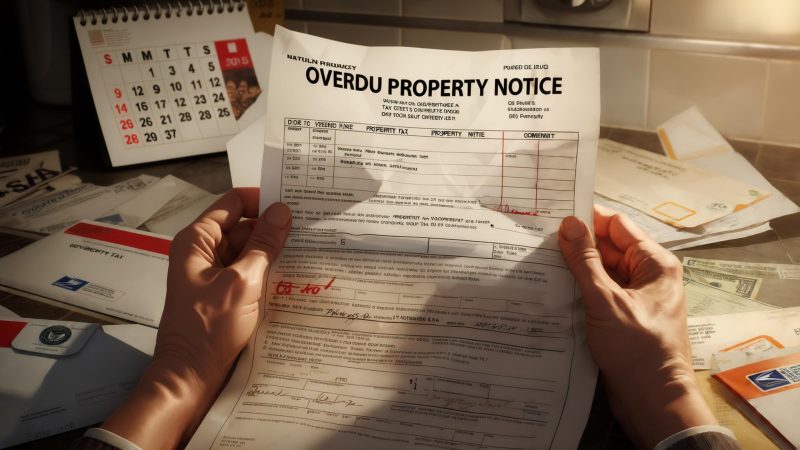
In 2019, a stretch of high-interest debt combined with a slow period at work left Oscar’s credit score damaged, sitting at approximately 585 according to a report he pulled in early 2025. The couple rents a two-bedroom apartment in Sacramento for $1,850 per month. Their landlord notified them in January 2026 that rent would climb to $2,075 starting in March — a $225 monthly increase that arrived in the same envelope as the new year.
Oscar filed for Social Security retirement benefits in early 2025, shortly after his 66th birthday in March. He chose to begin collecting at his full retirement age rather than delay further, a decision he made partly because he had nothing else to bridge the gap. According to SSA.gov’s retirement benefits page, claiming at full retirement age allows beneficiaries to receive 100% of their calculated benefit amount. For Oscar, that figure came to $2,095 per month.
The 2026 COLA and How Payment Dates Actually Work
The 2026 Cost-of-Living Adjustment was set at 2.5%, a figure confirmed by SSA.gov’s COLA information page. The increase took effect with benefits paid beginning in January 2026 — but “beginning in January” does not mean the same date for every beneficiary. The SSA staggers payment dates based on birth dates, a system Oscar said he had to look up several times before it made sense to him.
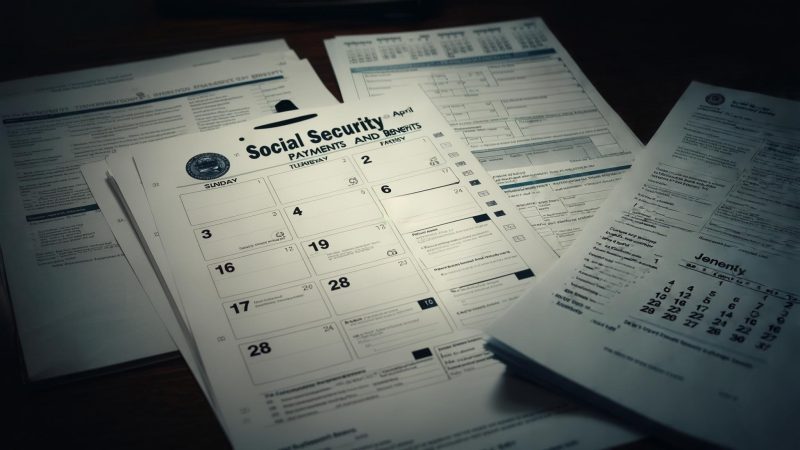
Oscar was born on March 7. Because his birthday falls between the 1st and the 10th of the month, his first 2026 COLA-adjusted payment landed on January 14, 2026 — a Wednesday. Beneficiaries born between the 11th and 20th received their payment on January 22. Those born between the 21st and 31st waited until January 28. A separate group — those who began receiving benefits before May 1997 — received their January check on January 2.
“I kept thinking it would come on the first,” Oscar told me. “My neighbor gets hers on the second — she’s been on Social Security longer than me. I’m sitting there January 2nd checking my bank app every hour like an idiot. I didn’t know there were different groups.”
The Day the Deposit Hit — and the Math That Followed
On January 14, 2026, Oscar’s bank account showed a deposit of $2,147 — his first COLA-adjusted Social Security payment. The increase came to roughly $52 over his previous $2,095 monthly benefit. He pulled out his phone at the diner and showed me the notification screenshot he had saved, the timestamp reading 12:04 a.m.
When I looked at Oscar’s monthly budget with him — he had sketched it on a paper napkin while we talked — the numbers were tight regardless of the COLA. His take-home from FedEx after taxes runs approximately $3,400 per month. Combined with Social Security, the household pulls in about $5,547 monthly. But after rent, utilities, groceries, Medicare premiums for both him and Carmen, and minimum payments on roughly $11,000 in lingering credit card debt, Oscar estimates his family nets somewhere between $400 and $600 per month.
“There’s no cushion,” he said — not with self-pity, but with a flatness that was harder to absorb than anger would have been. “If the truck breaks down, if Carmen has a health issue — we’re immediately behind.”
What Oscar Wishes He Had Known Sooner
The conversation eventually turned toward regret — not dramatized, but measured. The kind of regret that has already been processed and simply lives alongside a person now. Oscar told me that through most of his 40s and early 50s, retirement felt abstract. He was making decent wages at FedEx, Carmen was working, the bills were manageable. Until they stopped being manageable.
“I wish someone had explained the COLA thing to me years ago,” he said. “I thought Social Security was like a savings account — you put in, you take out. I didn’t understand that the adjustments are tied to an inflation index. I had no idea what any of it meant. I was just not paying attention.”
He also told me he had no idea that the SSA publishes a full payment schedule well in advance each year. Had he known his January 14 date from the start, he said, he wouldn’t have spent two anxious weeks watching an app for a deposit that was never going to arrive early.
Carmen enrolled in Medicare after her retirement, as did Oscar. According to Medicare.gov’s getting started guide, most people pay no premium for Medicare Part A if they or their spouse worked and paid Medicare taxes for a sufficient period. Part B carries a standard monthly premium — set at $185.00 in 2026 — that both Oscar and Carmen now pay separately. That is $370 per month between them, a cost Oscar said he had not factored into his original retirement income estimates.
The list of things Oscar did not know — payment schedules, COLA mechanics, Medicare premiums — is not a list of failures. It is a list of information gaps that affect a substantial portion of Americans who approach retirement without a financial advisor, without an employer-sponsored retirement account, and without the resources to research what they do not yet know they need to know.
The Weight of Going Through the Motions
Before I left the diner that Saturday, I asked Oscar what he thinks about in the morning before his shift starts. He picked up his coffee, looked at it for a moment, and gave me the same kind of answer he had given the radio host weeks earlier.
“I think about the route,” he said. “What packages I’ve got. What traffic’s going to look like on I-80. I stopped thinking too far ahead a while back. It doesn’t help.”
That answer stayed with me on the drive back to Sacramento. Oscar Ochoa’s situation is not unusual — it is, in fact, a precise portrait of a generation of working Americans who earned decent incomes across decades, absorbed real financial setbacks, and arrived at retirement age with Social Security as their primary, and in some months their only, reliable safety net. The 2.5% COLA in 2026 brought him approximately $52 more per month. His landlord raised rent by $225 in the same quarter.
Oscar is not broken by this. He told me he plans to keep driving until his body says otherwise. But his story is a clear-eyed account of what it looks like when the math never quite catches up — and when a Cost-of-Living Adjustment, however real, lands too small and too late to change the equation. The payment arrived on schedule. Everything else did not.
To confirm your own 2026 benefit payment dates or to review how COLA adjustments are calculated, the SSA maintains current information at SSA.gov’s retirement benefits section.


Leave a Reply