

The SSA’s periodic review notices go out quietly — no certified mail, no follow-up call, no text alert. For families who rely on children’s survivor benefits as a fixed line in a tight monthly budget, that silence can become a crisis by the time anyone realizes the payment has stopped. This spring, as SSA review cycles have resumed in full following some administrative delays, advocates and financial counselors are warning recipients to watch for correspondence with unusual urgency.
I first heard Renee Ramos’s name from a financial counselor I had been interviewing for a separate story on benefit recipients in the Southwest. As we wrapped up, she mentioned Renee almost as an afterthought. “She’s the type of person everyone assumes has it handled,” the counselor said. “Until suddenly she doesn’t — and she won’t tell anyone.” A few days later, Renee agreed to meet me.
When I sat down with Renee at a coffee shop in Tucson, Arizona, on a Thursday afternoon in late March 2026, she arrived in a pressed blazer and spoke in the measured, careful cadence of someone who spends her days reviewing other people’s claims for a living. She is 48 years old, works as an insurance claims adjuster, earns what she describes as a comfortable income, and is raising a 3-year-old daughter, Mia, on her own after separating from her ex-partner. She ordered a black coffee and folded her hands on the table.
“I am not someone who misses things,” she told me. “That’s the part I keep coming back to. I do this for work. I read documents for a living. And I still let it happen.”
The Payment That Wasn’t There
Renee’s daughter Mia has received a Social Security survivor benefit since early 2024, following the death of her father — Renee’s ex-partner — in October 2023. He was 44 when he died unexpectedly from a cardiac event. Based on his earnings record, the SSA’s survivor benefit program qualified Mia for a monthly payment of $612, which Renee received on the second Wednesday of each month as the child’s representative payee.
For Renee, that $612 was not discretionary income. It covered a meaningful portion of Mia’s daycare costs, which run $1,850 per month at a licensed facility near their home in the Midtown Tucson area. The rest came out of Renee’s own earnings. The arrangement was tight but functional — until February 2026, when the deposit simply did not appear.
“I checked my account three times that morning,” Renee told me. “I thought it was a bank thing. Then I thought maybe SSA was running late. I gave it two more days before I called.” Those two days, she said, cost her more in stress than the money itself.
The Letter She Never Opened
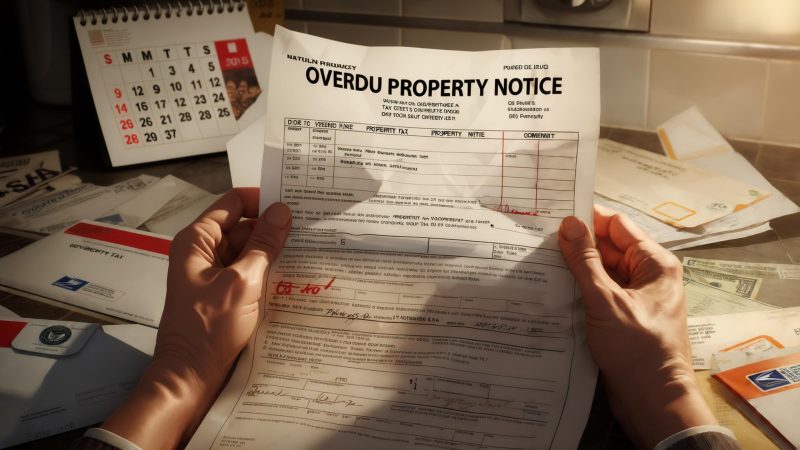
When Renee finally reached an SSA representative — after a hold time she described as “just under two hours” — she learned that a periodic review notice had been mailed to her home address in early January 2026. The letter requested verification that Mia still met eligibility requirements as a dependent child survivor: confirmation of her living arrangement, school or care enrollment documentation, and a signed representative payee update form.
The response deadline printed on the letter was February 3, 2026. Renee never responded because, she told me, she never processed the letter as requiring action. “I remember seeing something from SSA,” she said slowly, “and I set it aside because I assumed it was the annual COLA notice about the payment increase. I told myself I’d look at it over the weekend.” The weekend came and went. The letter stayed on her kitchen counter until mid-February, buried under Mia’s daycare paperwork.
According to SSA’s representative payee guidelines, the agency conducts periodic reviews of children’s survivor benefit cases to confirm continued eligibility. The frequency varies by case type, but beneficiaries and payees are notified exclusively by first-class mail. There is no automated phone call, no email, and no online portal alert. If the payee does not respond within the stated deadline, SSA may suspend payment while the case is flagged for review.
The Financial Pressure Already in the Room
What made the six-week gap particularly difficult for Renee was that her finances were already carrying weight she hadn’t shared with many people. She owns a 2021 SUV on which she owes approximately $24,000 — a vehicle that, given current used-car market conditions, she estimates is worth closer to $16,000. That gap, roughly $8,000 in negative equity, has kept her from refinancing at a better rate and contributed to a credit score that hovered around 592 at the time of our conversation.
“I make good money,” she said, and I believed her — her income as a senior claims adjuster in Arizona is comfortably in the upper-middle range. “But I make good money and I make good decisions with about 80 percent of it. The other 20 percent I’ve been managing badly for a while.” She didn’t elaborate, and I didn’t push.
The point, she said, was that the $612 survivor benefit was not cushion money. It was load-bearing. When it disappeared, she covered the daycare shortfall using a credit card she had been working to pay down — adding roughly $1,240 in new charges over the six weeks the benefit was suspended.
What the COLA Notice Actually Said
The document Renee had confused with the review notice — the one she assumed she had already read — was the annual Social Security COLA notification informing her that Mia’s benefit had increased slightly for 2025. The 2025 cost-of-living adjustment, which SSA confirmed at 2.5%, had bumped Mia’s monthly benefit from $597 to $612 beginning with the January 2025 payment. That letter arrived in late 2024 and was, by Renee’s account, genuinely informational — no action required.
The January 2026 review notice looked similar from the outside: a standard SSA envelope, a long reference number, dense text. “I glanced at it and thought I already knew what it said,” Renee told me. The two letters, she now understands, were entirely different documents with entirely different stakes.
The Outcome — and the Number That Doesn’t Come Back
By the time I spoke with Renee, the case had been resolved. She had submitted the required documentation — proof of Mia’s residence, updated daycare enrollment records, and a renewed representative payee statement — and SSA had restored regular monthly payments. The February and March deposits, totaling $1,224, were not reinstated. That money, under the circumstances of her case, was simply gone.
“I asked three different people at SSA whether there was any path to recover those payments,” she said. “And they were all very polite. They all said the same thing.” She paused. “No.”
The credit card charges she absorbed during those six weeks have since added roughly $38 in interest to her balance. That number is small against the larger context of her finances, but she mentioned it with a particular sharpness — the compounding of one avoidable mistake into a chain of small costs she can now trace with precision.
She has since set up a dedicated folder on her kitchen counter labeled “SSA — Open Immediately.” She has also asked the financial counselor who connected us to help her build a checklist of recurring benefit-related mail she should watch for each year. “I should have had that from the beginning,” she said, without self-pity. “I just didn’t think I needed it.”
What Renee Wants Other Parents to Know
Before we finished, I asked Renee what she would say to another single parent in a similar situation — someone managing a child’s survivor benefit alongside everything else that comes with that life. She thought about it for a moment longer than her other answers.
“Don’t assume that because a payment has been coming reliably for a year, it will keep coming reliably,” she said. “SSA is not going to call you. They’re not going to text you. They sent a letter, and if you don’t read it, that’s the whole story.” She picked up her coffee. “And open every single thing that comes in that envelope, even when you think you already know what it says. Especially then.”
Renee’s regular payments have now resumed. Her April deposit arrived on schedule. She checked her bank account at 8 a.m. on payment day — something she had never bothered to do before February — and sent me a one-line message when it cleared: “It’s there.”
Two words that, for six weeks, she had not been able to send.



Leave a Reply