
Margaret turned 65 in October, celebrated with her family, and assumed Medicare would just kick in; the way Social Security did when she filed online. By the time she realized Part B required active enrollment, her seven-month window had closed. Thirty days too late.
The penalty letter arrived in February, and it wasn’t a one-time fine. It was a permanent surcharge she’d pay every single month for the rest of her life.
That story isn’t unusual. Thousands of people miss the Medicare Part B enrollment window each year, often by a matter of weeks, and discover too late that the penalty system has no grace period and almost no mercy, according to thedailycheck.org. Understanding exactly how this works, and what it actually costs; is one of the most important things you can do before you turn 65.
How the Medicare Part B Enrollment Window Actually Works
Your Initial Enrollment Period (IEP) spans seven months: the three months before your 65th birthday month, your birthday month itself, and the three months after. Miss that window without qualifying coverage; meaning active employer-sponsored insurance through current employment, and you’re locked out until the General Enrollment Period, which runs January 1 through March 31 each year. Coverage under the GEP doesn’t even begin until July 1 of that year.
That gap matters. Someone who misses their IEP in October could wait until the following March to enroll, then wait until July for coverage to start; nearly nine months without Part B. And they’ll carry the penalty forever.
| Years Delayed | Penalty % | Monthly Surcharge (2026) | Extra Cost Over 10 Years |
|---|---|---|---|
| 1 year | 10% | +$18.50 | ~$2,220 |
| 2 years | 20% | +$37.00 | ~$4,440 |
| 3 years | 30% | +$55.50 | ~$6,660 |
| 4 years | 40% | +$74.00 | ~$8,880 |
Based on 2026 standard Part B premium of $185.00/month. Assumes flat premiums for illustration; actual costs will be higher as premiums increase annually.
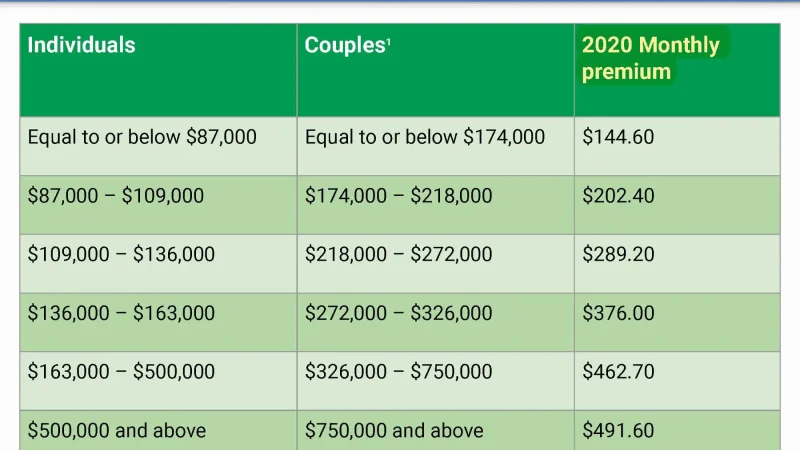
The 2026 standard Part B premium is $185.00 per month. A 10% penalty, the minimum, for missing enrollment by even one full 12-month period; adds $18.50 every month. That’s $222 per year.
Over ten years, you’ve paid an extra $2,220 for a mistake that took thirty days to make. Over twenty years, assuming just 3% annual premium growth, the total penalty cost climbs past $5,900.
What Counts as a “Full 12-Month Period”: and Why 30 Days Can Still Trigger It
This is where people get confused, and where the real trap lies. The penalty is calculated based on full 12-month periods during which you were eligible for Part B but didn’t enroll. You might assume that missing your window by 30 days means you’ve only delayed by one month, so the penalty would be minimal or nonexistent.
That assumption is wrong. According to Medicare, according to medicare.gov.gov, the penalty equals 10% for each full 12-month period you delayed. But the clock doesn’t start fresh at your birthday; it starts from when your IEP ended.
Related: Everything I Read Said Medicare Had Flexible Enrollment Options — Then a 3-Month Delay Hit Me With a $2,000 Permanent Penalty I Can’t Escape
If your IEP ended in January and you don’t enroll until the following General Enrollment Period in March, you’ve gone more than 12 months without coverage. That triggers the full 10% penalty, even if you only missed your original window by a few weeks. The math is unforgiving. Miss your IEP by 30 days in October. The next enrollment opportunity is January through March. Coverage starts July 1. You’ve now been uninsured for Part B purposes for roughly 21 months, and you’ve crossed the 12-month threshold. The 10% penalty attaches permanently. Most financial penalties have an endpoint. Pay a tax late, and you owe interest until the balance is cleared. Miss a credit card payment, and your rate may spike temporarily. The Medicare Part B late enrollment penalty works differently: it never goes away. Per Medicare Interactive, for each 12-month period you delay enrollment in Part B, you pay a 10% premium penalty; and you pay it for as long as you have Part B. There is no payoff date. There is no forgiveness after five years. Someone who delays enrollment for two years and then lives to 90 will pay that 20% surcharge for 25 years. CMS confirmed in 2025 guidance that late enrollment penalties apply equally whether you’re on Original Medicare or enrolled in a Medicare Advantage plan. Switching to Medicare Advantage doesn’t erase the penalty, it follows you into whatever plan you choose. The penalty can be waived in limited circumstances. According to Medicare Resources, if your delay was caused by receiving bad advice from a federal employee; such as incorrect guidance from a Social Security Administration representative, you may be able to request a waiver. Documentation is required, and approval is not guaranteed. For most people who simply didn’t know the rules, no waiver path exists. Several common scenarios lead people directly into this penalty. Knowing them in advance is the most practical protection available. The $2,000 figure in the headline isn’t a one-time fine. It represents approximately what a single 10% penalty costs over the first decade of retirement, $18.50 per month, $222 per year, $2,220 over ten years. That’s the floor, not the ceiling. As the standard Part B premium rises; and it has risen in most years, the dollar amount of the penalty rises with it. A 10% surcharge on a $185 premium today becomes a 10% surcharge on whatever the premium is in 2031 or 2036. The percentage is locked at enrollment; the dollar amount keeps climbing. For someone who delayed two years, the math doubles. A 20% penalty on today’s premium is $37 per month; $444 per year, $4,440 over ten years. With realistic premium growth factored in, a two-year delay can easily cost $8,000 to $10,000 in extra lifetime payments. I’d recommend running this calculation yourself using your actual expected retirement age and a conservative 3% annual premium growth rate. The numbers tend to be more alarming than people expect, and seeing the real figure is often what motivates people to act before their window closes. The most effective protection is calendar-based. Mark your 65th birthday and count backward three months; that’s when your IEP opens. Mark forward three months from your birthday month, that’s when it closes. Set reminders six months before your birthday so you have time to research your options without pressure. If you’re working past 65, get written confirmation from your HR department that your employer coverage qualifies for the Part B delay exemption. Not all employer plans meet Medicare’s standards, and a verbal assurance isn’t documentation. The National Council on Aging recommends contacting your State Health Insurance Assistance Program (SHIP) for free, unbiased counseling before making any Medicare enrollment decisions. SHIP counselors are trained specifically in Medicare enrollment rules and can review your specific coverage situation at no cost. If you’ve already missed your window and are facing a penalty, contact Social Security immediately to enroll during the next General Enrollment Period (January 1 through March 31). Every additional month of delay past the 12-month threshold risks triggering a higher penalty tier. Acting quickly limits the damage, even when it can’t eliminate it entirely. Why the Penalty Is Permanent: and Why That Matters More Than People Realize
The Situations That Catch People Off Guard
What the Real $2,000 Figure Actually Represents
How to Protect Yourself Before the Window Closes
More Stories Like This
Frequently Asked Questions



Leave a Reply