
The paper plates were still out on the folding table when my friend Rosa pulled me aside at a neighborhood barbecue last August and said, “You need to talk to Bernice.” Bernice Underwood was standing near the fence in a floral blouse, holding a glass of iced tea and looking, as Rosa put it, like someone who had been holding a very heavy box for a very long time. A few days later, I drove to a coffee shop off Northwest Expressway in Oklahoma City, and Bernice Underwood sat down across from me with a three-inch accordion folder stuffed with SSA correspondence, denial letters, and printouts from her online MySSA account.
She is 63 years old, single, and has spent 11 years as a legal secretary at a mid-size civil litigation firm. She lives with a roommate to manage rent in a city where costs have quietly climbed. She is the kind of person who color-codes her calendar and tracks expenses in a spreadsheet — ambitious, methodical, and, as she told me flatly in our first conversation, “completely blindsided by all of this.”
The Injury That Started Everything
In September 2024, Bernice was moving a stack of archival case files — roughly 40 pounds of binders — from a storage room on the third floor of her firm’s building. There was no cart available. She made two trips herself and, on the second, felt something give in her lower back. She described it to me as “a sound and a feeling at the same time, like a zipper pulling the wrong way.” An MRI later confirmed a herniated disc at L4–L5.
She filed a workers’ compensation claim in October 2024. Her employer’s insurer disputed it almost immediately, arguing that her documented history of lower back stiffness — noted in a routine physical two years prior — constituted a pre-existing condition. By December 2024, the claim was formally denied. Bernice told me she spent $1,200 on an independent orthopedic consultation to fight the denial, money she charged to a credit card she hadn’t touched in two years.
That “something else” was Social Security Disability Insurance. In January 2025, Bernice submitted her SSDI application online through the Social Security Administration. She had 26 years of work credits. Her estimated benefit, based on her earnings record, was listed at approximately $1,340 per month. She printed that estimate and tucked it into the accordion folder. She would look at it often over the following year, she told me — not with confidence, but with something closer to desperation.
When Identity Theft Entered the File
Three weeks after submitting her SSDI application, Bernice logged into her MySSA account to check the status. She found a phone number on file that she did not recognize — a 305 area code she had never used — and a direct deposit account linked to a bank she had never heard of. Someone had accessed her SSA profile and rerouted her potential benefits before a single payment had ever been issued.
According to the SSA’s anti-fraud resources, benefit payment fraud through compromised online accounts has been a persistent problem, with the agency’s Office of Inspector General receiving tens of thousands of fraud reports annually. Bernice’s case was flagged and forwarded to SSA’s fraud resolution unit — but that flag also froze her pending SSDI application.
What followed, as Bernice walked me through it, was a bureaucratic stall that stretched across most of 2025. She called SSA’s 1-800 number repeatedly. She visited her local field office on NW 23rd Street in person four separate times. Each visit produced a slightly different answer: the fraud review was pending, then it was complete but the application still needed secondary review, then there was a documentation request she had never received by mail.
Debt Mounting While the Clock Ran
While the SSDI case sat frozen, Bernice’s financial situation deteriorated in layers. She had taken out $52,000 in federal graduate loans to complete a Master of Legal Studies degree she finished in 2019 — a credential she hoped would move her into a paralegal management role. That promotion never materialized. By the time I met her, her remaining balance was approximately $47,200, and her income-driven repayment plan had been recalculated upward because her most recent tax return still showed her pre-injury salary.
The identity theft that compromised her SSA account had also left marks on her credit profile. A credit card opened in her name at some point in late 2023 — which she discovered only during a free annual credit check in early 2025 — had been used and gone delinquent. Her credit score, she told me, dropped from the low 700s to 581 in roughly six months.
She borrowed $3,500 from her older sister in Tulsa over the span of five months to cover rent shortfalls. She reduced her grocery budget to roughly $130 per month. She deferred a dentist appointment she’d been putting off for two years because even the co-pay was out of reach. “I kept telling myself it was temporary,” she said. “That was the only way to keep moving.”
The Turning Point — and the First Check
In November 2025, Bernice found an SSA-certified disability advocate through a nonprofit legal aid organization in Oklahoma City. The advocate — working at no upfront charge — identified that a secondary documentation request had been mailed to an outdated address on file, one she had updated in person but that had not been corrected in the central system. That single clerical gap had stalled her review for nearly four months.
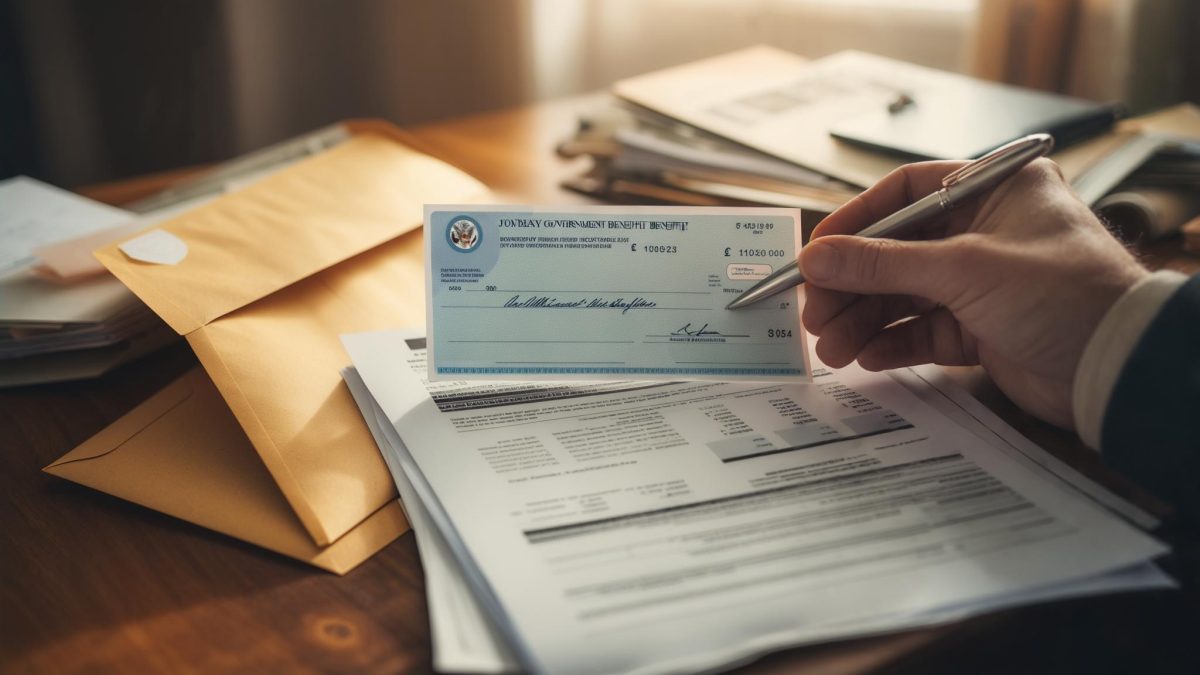
Because Bernice was born on the 9th of the month, her payment schedule under the SSA’s staggered system falls on the second Wednesday of each month. According to the SSA’s payment schedule, beneficiaries born on days 1 through 10 receive payments on the second Wednesday. Her February 2026 payment — $1,340 — arrived on February 12th.
She also received a lump-sum back payment of $4,020, representing the three months of benefits that SSA calculated as retroactive after subtracting the standard five-month waiting period from her September 2024 onset date. It was, by any measure, less than the full amount she had lost income on — but it was real, and it was in her account.
Where Bernice Stands Now
When I followed up with Bernice in late March 2026, she had received her second and third SSDI payments on schedule. She had used $2,000 of her back pay to begin repaying her sister. The remaining $2,020 went toward catching up on two months of credit card arrears tied to the fraudulent account — a balance a consumer protection attorney was helping her dispute as identity-theft-related debt.
The 2.5% COLA adjustment that took effect for SSDI beneficiaries in January 2026 added roughly $33 to her monthly check, bringing it to approximately $1,373. It is not a transformative sum. But Bernice, who tracks every dollar, knows exactly what it covers: her share of the utilities.
She is still contending with $47,200 in student loan debt. Her credit score recovery is slow but measurable — she told me it had climbed back to 619 as of early April. She has not returned to full-time work due to her back injury, and she is being evaluated to determine whether her condition qualifies as permanent. There is no tidy ending here, and Bernice would be the first to say so.
Driving back from that last conversation, I kept thinking about the accordion folder — the one stuffed with 16 months of paperwork that Bernice carried to every single SSA visit. She had organized it with labeled tabs. Even in the middle of everything falling apart, she had made tabs. That detail, more than any dollar figure, told me everything I needed to know about Bernice Underwood.
Related: He Pays Double Into Social Security Every Year — This Oklahoma Mechanic’s Retirement Wake-Up Call at 43
Related: A Home Health Aide’s Best Earning Year Quietly Raised His Medicare Bill by $888 — He Had No Idea Why
.pvv-faq-section details summary::-webkit-details-marker{display:none}.pvv-faq-section details summary::marker{display:none;content:””}.pvv-faq-section details[open] summary .pvv-faq-arrow{transform:rotate(90deg)}




Leave a Reply