

Social Security is not just a retirement program — and the people who know that best are the ones who never expected to need it before their 50th birthday. According to the Social Security Administration, more than 8.4 million non-elderly Americans receive Social Security Disability Insurance benefits, many of them under 40. For most of them, the path to that check started not with planning, but with a crisis.
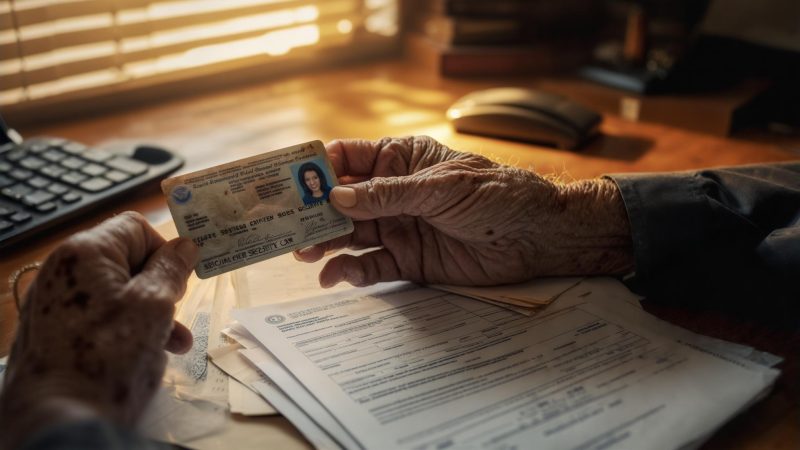
I was in the Columbus, Ohio SSA field office on a Tuesday morning in mid-March 2026, reporting on delays in direct deposit processing for retirees in the region. The waiting room was crowded — plastic chairs, fluorescent lights, a digital number board ticking through appointments at a pace that felt almost designed to discourage people. That’s where I noticed Duane Neville.
He was 25 years old, wearing a store manager badge from a regional retail chain, sitting rigid in his chair the way someone does when their back hurts and they won’t admit it. He’d been there for two hours. When I introduced myself and explained I was a journalist covering benefits and payment issues, he looked at me with the particular skepticism of someone who has been told too many times that help is coming.
“I don’t do the financial advice stuff,” he said, right off the bat. “That’s for people with money to move around. I’m just here trying to figure out what I’m owed.”
That sentence stayed with me for the rest of our conversation — and it’s the reason I’m telling his story.
The Injury That Changed Everything
Duane manages a mid-sized retail store on the east side of Columbus. His annual salary sits at approximately $38,000 — enough to cover the basics for himself, his wife, and their blended household of four children, but without much margin for error. On January 14, 2026, that margin disappeared entirely.
He slipped on an icy loading dock while helping unload a freight delivery — something he said he’d done hundreds of times. The fall compressed two discs in his lower back. He was taken by ambulance to a nearby urgent care, then referred to an orthopedic specialist who recommended restricted movement and physical therapy for a minimum of eight weeks.
His employer’s workers’ compensation insurer denied the claim on February 3, 2026. The stated reason: a pre-existing degenerative disc condition that the insurer argued was the primary cause of the injury, not the fall itself.
“They said I had a pre-existing thing,” Duane told me, shaking his head slowly. “Like every person who does physical work for years doesn’t have wear and tear. That’s not a pre-existing condition — that’s just being alive.”
By the time his appeal window with the workers’ comp insurer closed on February 28, he had accumulated $3,200 in medical bills, missed nearly six weeks of full-time work, and fallen $2,847 behind on his property taxes. His wife had picked up extra shifts at her job, but with four kids at home, childcare costs absorbed much of that additional income.
What a 25-Year-Old Doesn’t Know About Social Security Disability
Duane came to the SSA office because a coworker had mentioned SSDI in passing. He had almost no knowledge of how the program worked — a reality that is more common than most people assume.
What Duane didn’t know — and what most people in their 20s don’t know — is that SSDI eligibility for younger workers requires significantly fewer work credits than for older applicants. According to SSA.gov’s disability eligibility guidelines, workers between ages 24 and 31 need credits earned in only half the time between age 21 and the onset of disability. Duane, who had been working steadily since age 17, had more than enough credits on record.
The harder reality — the one nobody in the waiting room that day seemed eager to say out loud — is that SSDI approval is neither fast nor guaranteed. Initial denial rates run above 60% nationally, and the process from application to first payment can take well over a year for cases that go to appeal.
The Conversation He Almost Didn’t Have
When I asked Duane how he ended up at the SSA office rather than pursuing a legal appeal of the workers’ comp denial, he paused before answering. He stared at the number board on the wall for a moment.
“I thought about the lawyer thing,” he said. “But I don’t have money for a retainer, and I didn’t know the contingency stuff. I figured — let me just go see what exists. I don’t like asking for things. That’s not how I was raised. But I’ve got four kids and a wife, and my back doesn’t let me stand for more than twenty minutes right now.”
His stubbornness, he admitted, had already cost him time. He’d waited nearly five weeks after the workers’ comp denial before taking any action — five weeks during which the property tax penalties were compounding and his small landscaping side business, which had already been declining, slipped further. He’d earned roughly $800 a month from that side work at its peak in 2024; by early 2026, it was generating closer to $200 a month, largely because he could no longer do the physical labor himself.
As Duane explained his situation, it became clear that the intersection of a denied workers’ comp claim, declining secondary income, and property tax arrears had created a compounding pressure that no single program was designed to address all at once. He wasn’t looking for a handout — he was trying to understand the architecture of a system he’d paid into since his first job at 17, and which he’d never once thought he might need before his 26th birthday.
What He Learned — and What He’s Still Waiting On
Duane’s SSA appointment that morning lasted about 45 minutes. When he came back out to the waiting area to collect his jacket, he had a stack of paperwork and a look that wasn’t quite relief but wasn’t despair either.
He had been walked through the SSDI application process. The SSA intake worker confirmed he had sufficient work credits. He was told to gather medical documentation from his orthopedic specialist, the urgent care records from January 14, and any documentation from the workers’ comp denial — all of which would be submitted as part of his initial application.
The SSA worker also told him about the Ticket to Work program and Supplemental Security Income as a potential parallel path, depending on the outcome of the SSDI determination. Duane told me he took the information but made no promises about pursuing it.
“They gave me a lot of papers,” he said with a short laugh. “I don’t know what half of it means. But I know I have to try.”
When I asked whether he regretted waiting five weeks to come in, he didn’t hesitate.
“Yeah. I do. I thought I could figure it out myself. That’s always my first instinct. But this isn’t like fixing a leaky pipe — you can’t just YouTube how to deal with the government.”
The Long Road That Still Lies Ahead
Duane’s story doesn’t have a tidy ending — and that matters. The SSDI process is not a rescue system in the traditional sense. Even if his application is approved on the first attempt, he faces the mandatory five-month waiting period before any payment arrives. If his onset date is established as January 14, 2026, the earliest his first check could arrive would be approximately July 2026 — assuming approval with no appeals.
The property taxes won’t wait. The medical bills are already in collections review. His side business is effectively dormant. And Duane is managing it all with the same stubborn self-reliance that, by his own admission, cost him five weeks he didn’t have.
I left the SSA office that afternoon thinking about how many people are sitting in waiting rooms just like that one — people who spent years paying into a system and never once read the fine print about what it could do for them. Duane told me something as I was putting my notebook away that I keep coming back to.
As of this writing in late March 2026, Duane has not yet submitted his formal SSDI application. He’s still gathering records. His back still hurts. He’s still going to work part-time because full-time isn’t physically possible and the bills don’t stop arriving.
His outcome is genuinely uncertain. There is no guarantee of approval, no guarantee of the timeline, and no guarantee that the amount — if it comes — will be enough to cover the gap that has opened in his family’s finances over the past ten weeks. What is certain is that he is no longer waiting alone in a room with no information. That part, at least, changed on a Tuesday morning in Columbus when he finally walked through the door.
Related: My Workers’ Comp Claim Was Denied — Now a Debt Collector Is Taking 25% of My Freelance Income



Leave a Reply