
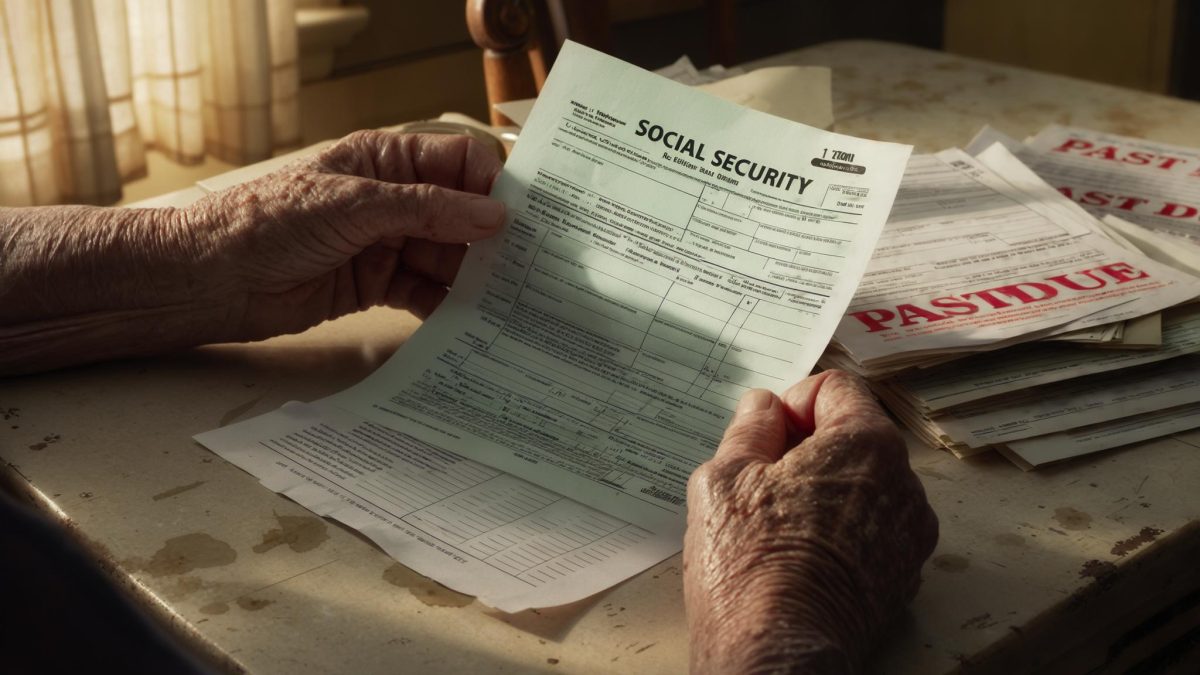
The envelope from the Social Security Administration had been sitting on Miguel Jennings’ kitchen counter in Detroit for eleven days before he opened it. Not because he forgot it was there. He just wasn’t ready for what it might say.
When I connected with Miguel in late February 2026, it was through a call-for-sources I’d posted on social media asking to hear from people navigating government benefits while managing competing financial obligations. His response was short: “I just opened my SSA statement and I have questions. Or maybe I have answers I don’t like.” We scheduled a call for the following Tuesday morning.
The Man Behind the Statement
Miguel Jennings is 61, a pest control technician who has worked the same Detroit-area territory for nearly two decades. He’s divorced, pays $680 a month in child support for his two kids — ages 14 and 16 — and owns a small house in a neighborhood just north of the Davison freeway. He lives alone. His income, by most measures, is solid.
In October 2024, his employer bumped his salary from roughly $58,000 to $72,000 after years of pushing for it. That raise, Miguel told me, felt like a turning point. “I thought, okay, now things start getting better,” he said. “Now I can start stacking something away.”
What happened instead is a story a lot of people in their early sixties know well. The raise came. The lifestyle adjusted. The savings did not materialize the way he pictured.
By the time 2026 arrived, Miguel was also carrying approximately $4,200 in delinquent property taxes owed to Wayne County — not catastrophic, but enough to sit in the back of his mind during every budget conversation he had with himself. He’d been making partial payments, but the balance kept floating.
What the Statement Actually Said
The SSA mails paper statements to workers aged 60 and older who aren’t yet receiving benefits, according to SSA.gov’s my Social Security portal. Miguel’s statement reflected his full earnings record through the most recent year on file and offered projected monthly benefit amounts at three claiming ages: 62, 67, and 70.
Those numbers aren’t adjusted in real time for future COLA increases — the statement reflects current-law estimates assuming earnings continue at the same level. For 2025, Social Security recipients saw a 2.5% COLA adjustment, and preliminary estimates for 2026 came in around 2.3%, according to SSA COLA fact sheets. Miguel’s actual future benefit would be nudged upward each year by those adjustments — but the base number was what caught his eye.
“I stared at that $1,847 for a while,” he told me. “And then I started doing the math in my head. Take out child support. Take out the property tax payment I’m supposed to be making. That’s not really $1,847 anymore.”
The Quiet Weight of Competing Obligations
When I asked Miguel to walk me through his monthly outflows, he didn’t hesitate. He’d clearly run the numbers before, probably more than once. Mortgage: $914. Child support: $680. Car payment: $387. Utilities and insurance: roughly $410. That’s $2,391 before groceries, gas, or the Wayne County tax catch-up payments he owes.
His full retirement age is 67, like most workers born after 1960 under current Social Security rules. Claiming at 62 would lock in a permanent reduction — roughly 30% less than his full retirement age benefit, a structure the SSA’s retirement age reduction chart lays out plainly. Miguel understood that conceptually. But the pull of stepping off the ladder in just one year was real.
“My back isn’t what it was,” he said. “You’re crawling under houses in Michigan weather. That gets old. No pun intended.”
The Moment Something Shifted
About forty minutes into our conversation, the tone changed. Miguel had been walking me through everything with the flat affect of someone who’d rehearsed this frustration so many times it had worn smooth. Then he said something that stuck with me.
He’d pulled up his SSA account online at my.ssa.gov in the weeks after receiving the paper statement, he told me, and found his full earnings history listed year by year going back to 1984. The years in his late twenties and early thirties were thin — he was doing side work then, some of it off the books, and those gaps showed up clearly in the record.
What he hadn’t fully absorbed until he sat with the statement was that Social Security calculates benefits based on your highest 35 years of indexed earnings. Years with low or no earnings bring down the average. His recent salary jump at $72,000 was actively replacing some of those weaker earlier years in the formula — which meant every year he continued working at his current income was quietly improving his eventual benefit, in ways the paper statement couldn’t fully capture.
Where Miguel Stands Now — and What He’s Still Sitting With
When I followed up with Miguel in mid-March 2026, he’d made one concrete change: he set up automatic payments to Wayne County for $350 a month toward his property tax arrearage. At that rate, he told me, he’d be clear of the debt in roughly thirteen months. It wasn’t dramatic, but it was movement.
He hadn’t made any decisions about his Social Security claiming age. He said he wasn’t going to — not yet.
“I’m not devastated,” Miguel told me during that follow-up call. “I think I just needed to stop avoiding the number. The number is what it is. Now I know what I’m working with.”
That’s not resolution, exactly. His child support obligation runs until his younger kid turns 18 in 2028. His back still bothers him in cold weather. And the gap between the life he pictured at this salary and the retirement timeline his statement reflects is real — not catastrophic, but real.
What stayed with me after reporting Miguel’s story wasn’t the dollar amounts, though I’ve thought about them. It was how long the envelope sat on the counter. Eleven days. The avoidance before the opening. Because the statement isn’t just a document — it’s a mirror. And at 61, with a raise that came too late and obligations that arrived on time, not everyone is ready for what they see.




Leave a Reply