
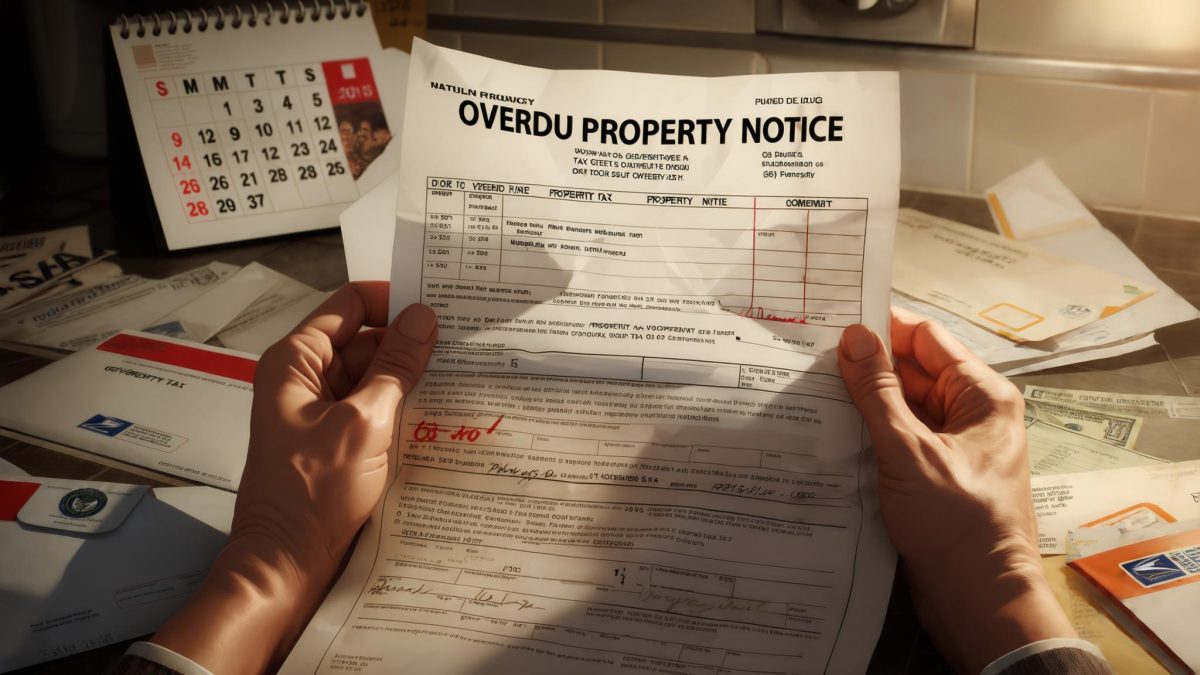
Predictable government benefits do not produce predictable financial lives. That assumption — the one most people carry without examining — is exactly what Harvey Rollins spent the better part of 2025 paying for, literally and painfully.
I met Harvey on a Tuesday afternoon in late March 2026, through a referral from the Americana Community Center in Louisville’s west end. A staff coordinator there told me they had someone whose story was “worth hearing.” She was understating it. When I sat down with Harvey in a quiet room off the center’s main hall, he was wearing his work scrubs — he’d come straight from a client’s home — and he looked like a man who had rehearsed what he was about to say, then decided to abandon the script entirely.
“I don’t talk about money stuff with anyone,” Harvey told me, folding his hands on the table. “My friends don’t know. My mom doesn’t know. You’re the first person outside my wife I’ve said any of this to out loud.”
A Family Budget Built Around a Check He Didn’t Fully Understand
Harvey is 30 years old. He works as a home health aide, earning roughly $36,000 a year before taxes. His wife, Dani, works part-time at a grocery distribution center, bringing in another $14,000 annually. Their six-year-old son, Marcus, was diagnosed with a neurodevelopmental disorder at age two, and qualifies for Supplemental Security Income — SSI — through the Social Security Administration. That monthly SSI check, currently $967 for an eligible child, is not a luxury for the Rollins family. It is load-bearing.
According to the SSA’s official payment calendar, SSI recipients receive their checks on the first of each month — or the preceding business day when the first falls on a weekend or holiday. Around 7 million Americans rely on SSI, and the Rollins household is one of them. Harvey knew the check came “around the first.” What he didn’t know, until it cost him, was what happens when the calendar does something unexpected.
The childcare costs for Marcus run approximately $1,100 a month. His needs require a specialized provider, not a standard daycare, and that premium doesn’t bend. Between childcare, rent, utilities, and two car payments, Harvey told me the family routinely finishes the month with less than $200 to spare. Property taxes on their small home — a three-bedroom house they purchased in 2022 for $148,000 — run $1,840 annually. That bill had been quietly slipping.
December 2025: When Two Checks Arrived and Harvey Didn’t Know Why
In December 2025, something unusual happened. Marcus’s SSI payment arrived twice — once in early December, and again near the end of the month. Harvey told me his first reaction was alarm, not relief.
What Harvey experienced was a documented and intentional feature of the SSI payment system. Because January 1, 2026 fell on a federal holiday, the SSA issued the January payment early — in late December 2025. As confirmed by El País USA’s coverage of the December schedule, the SSA confirmed that millions of SSI recipients would receive two payments in December 2025. The second payment was January’s check, delivered early. It was not a glitch. Nobody had sent Harvey a letter explaining that.
He spent those three weeks paralyzed. The $967 sat untouched. His property tax bill — already $810 past due — continued accumulating a 1.5% monthly penalty from Jefferson County. By the time Harvey confirmed, through a call to the SSA’s 800 number, that the money was legitimately his, the psychological damage was done. He’d missed a window to clear that debt before it compounded further.
Learning the 2026 Payment Calendar — Three Months Too Late
By the time Harvey sat across from me at that community center table, he had become something of a self-taught expert on SSA payment schedules. The education had been expensive. He now keeps a printed copy of the SSA’s 2026 benefit payment calendar taped to the inside of a kitchen cabinet.
The structure of that calendar is more layered than most people realize. SSI goes out on the first of each month. But standard Social Security retirement and disability payments follow a birth-date-based schedule — second Wednesday for birthdays on the 1st through 10th, third Wednesday for birthdays on the 11th through 20th, and fourth Wednesday for birthdays on the 21st through 31st. Recipients who began collecting benefits before May 1997 receive payment on the third of the month instead.
Harvey told me he wishes someone had handed him a version of that table when Marcus was first approved for SSI in 2022. “Nobody at the SSA office walked me through any of this,” he said. “They gave me a packet. I was so exhausted from the whole application process that I put the packet in a drawer.”
April 1, 2026 — and What Today Actually Means for the Rollins Family
Today is April 1, 2026. It is the date Harvey circled on that kitchen cabinet calendar two months ago. Marcus’s SSI payment — now slightly higher following the 2.5% Cost-of-Living Adjustment applied at the start of 2026 — is set to deposit today. According to the April 2026 SSI payment schedule, the first-of-month disbursement is going out as scheduled, with no weekend or holiday shifting this cycle.
Harvey told me that this month’s check — approximately $991 after the COLA adjustment — is earmarked almost entirely for the remaining property tax balance. Jefferson County gave him a payment plan in February. He has been making $300 monthly installments since then. Today’s deposit closes that arrangement.
The relief in clearing that debt is real but partial. Harvey was frank with me about what comes next. The childcare costs for Marcus are not going down. He told me he and Dani have talked about his retirement savings — a topic that genuinely frightens him — and that he currently contributes nothing to a 401(k) because there is nothing left after monthly expenses to contribute. “I’m 30 and I’m already worried I’ll work until I’m dead,” he said, without any trace of self-pity. It was a statement of arithmetic, not complaint.
The Embarrassment Nobody Talks About
Before I left that community center, I asked Harvey what it had cost him — not in dollars, but in energy — to carry this alone for so long. He was quiet for a moment. Around 74 million Americans rely on Social Security benefits in some form, and millions more receive SSI. The Rollins household is statistically unremarkable. And yet Harvey described feeling a deep shame about needing to understand a government payment system to keep his family housed.
“I work in healthcare. I take care of other people’s parents all day,” he said. “And then I come home and I can’t figure out why my kid’s SSI check came twice in one month. It makes you feel stupid, even when it shouldn’t.”
It shouldn’t. The SSI and Social Security payment calendars are genuinely complex, built around birth dates, benefit types, holiday schedules, and pre-1997 enrollment cutoffs that interact in ways the SSA does not proactively explain to most recipients. The burden of decoding that system falls on families who often have the least bandwidth to absorb it.
Harvey’s property tax debt is almost cleared. His retirement account remains empty. His son’s care costs remain high. The outcome of his story is not a triumph — it is a stabilization, fragile and hard-earned. When I shook his hand at the door of the community center, he said he felt better having talked about it. I believed him. Sometimes being heard is the first honest step toward being less afraid.
Related: She Cosigned a Loan She Never Borrowed. Now She Owes Taxes on Debt She Never Spent.




Leave a Reply