
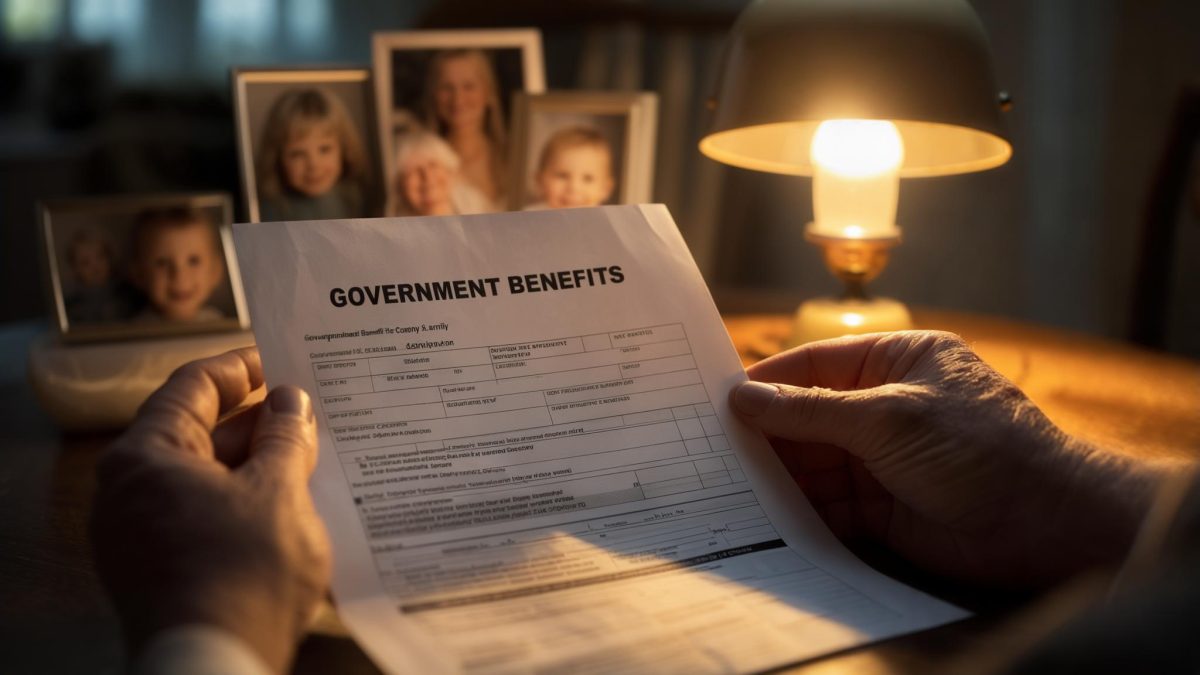
With the Social Security Administration having applied its 2025 COLA adjustment of 2.5% to benefits in January of that year, conversations about retirement projections have been picking up across the country — particularly among workers in their mid-50s who are watching the clock. Carlos Mendez, 55, a restaurant manager in Miami, Florida, is one of those people. He just wasn’t watching it voluntarily.
When I sat down with Carlos at a corner table in the same kind of casual dining spot where he’s spent most of his career, he ordered coffee and set his phone face-down. He said that was a habit now — face-down — because he didn’t want to see the bank notifications. He laughed when he said it, but his hands didn’t move.
A Family Built Across Two Marriages, One Paycheck at a Time
The first thing Carlos told me was that he doesn’t think of his household as complicated, even though, by any outside measure, it is. He and his wife are raising four children together — his two biological kids and her two from a previous relationship. The youngest is nine. The oldest is seventeen.
Carlos’s wife’s ex-husband is supposed to pay child support. According to Carlos, that check arrives when it feels like it. “Some months it comes, some months we call, some months we just stop expecting it and figure it out ourselves,” he told me. The inconsistency has become its own kind of budget line — a number that’s sometimes there and sometimes not, and Carlos has stopped building around it.
Before COVID, Carlos had worked his way up to general manager at a mid-size Miami restaurant group. He had roughly $34,000 set aside in a personal savings account and was making what he described as “not rich, but comfortable.” Then the restaurant closed in April 2020. By June 2021, the savings were gone — spent across fourteen months of rent, groceries, utilities, and the specific kind of daily cost that comes with keeping four children fed and clothed during a pandemic.
He found a new management position in late 2021. The pay was lower — he declined to give me the exact number, but said it was “enough to cover the bills, not enough to build anything back.” At 55, he is starting over financially in a way that most people associate with their late twenties.
The SSA Statement He Put Off for Two Years
Carlos had been getting emails from the Social Security Administration prompting him to log into his my Social Security account and review his projected benefits. He ignored them for the better part of two years. “I didn’t want to look at a number that told me I was behind,” he said. “I already knew I was behind.”
It was his wife who finally pushed him. She had looked at her own statement and wanted to compare. So in early February 2026, Carlos sat down and logged in for the first time since before the pandemic.
His projected Social Security retirement benefit, based on his current earnings record and an assumed retirement age of 67 — which is the full retirement age for anyone born between 1960 and later, per SSA guidelines — came out to approximately $1,640 per month. The national average monthly benefit for retired workers sits at roughly $1,927, according to SSA fact sheets. Carlos is below that average, largely because the fourteen months he went without work and the subsequent drop in salary pulled his lifetime earnings record down.
What the COLA Adjustment Actually Meant for His Future Number
The 2025 COLA of 2.5% boosted benefits for current retirees starting that January. For Carlos, who isn’t yet collecting, the adjustment doesn’t change his monthly check today — but it affects the baseline against which his future benefit will be calculated, and it shapes the broader context of what Social Security can realistically cover.
As Carlos explained it to me, he had assumed Social Security would be a “bonus” on top of retirement savings. The problem is that the retirement savings no longer exist. So what was supposed to be supplemental is now, potentially, load-bearing.
Carlos is twelve years from his full retirement age of 67. He knows that if he claimed early — at 62 — his benefit would be permanently reduced by as much as 30%. That option, he said, is off the table. “I can’t take a cut on something that’s already not enough,” he told me. The math simply doesn’t work for a household that may still have a teenager at home when he turns 62.
The Child Benefit Question Nobody Told Him About
This was the part of our conversation that genuinely surprised Carlos. When I mentioned that dependent children under 18 — and in some cases under 19 if still in high school — may be eligible to receive a benefit based on a parent’s Social Security record once that parent begins collecting, he went quiet for a moment.
“Nobody told me that,” he said. “Not one person.”
The reality for Carlos is more complicated than a clean answer. His youngest biological child would be 21 by the time he reaches full retirement age — too old to qualify for child benefits under his record at that point. And his stepchildren face additional eligibility criteria that depend on legal dependency status. But the conversation opened a door he hadn’t known existed.
A Mixed Outcome and No Clean Ending
When I asked Carlos what he planned to do differently after seeing his statement, he paused long enough that I didn’t rush him. He said he was going to try to increase his earnings, even if it meant picking up consulting work on weekends. He said he was going to stop ignoring the SSA emails. And he said he was going to look more carefully at the child support enforcement options available in Florida, because the sporadic payments from his wife’s ex were costing the family more than just the missing dollars.
He was not hopeful in the way people sometimes perform hopefulness for journalists. He was measured. He said he had made peace, mostly, with the fact that COVID had taken something from him that he would not fully recover before retirement. What he hadn’t made peace with was the idea that his kids might feel that gap too.
I left that coffee shop thinking about what Carlos had said about the P&L. He’s right — the tools for understanding a balance sheet are taught, practiced, drilled. The tools for understanding what the federal government will send you in your old age, and what your family might be entitled to under your record, are largely left to individuals to discover on their own, usually at the worst possible time.
Carlos is not a cautionary tale. He is a working person who got hit hard, got back up, and is now doing the difficult work of looking at numbers he’d rather not look at. That is not failure. But it is a reminder that a Social Security statement sitting unopened in a portal is a document that doesn’t age well.
Related: His Wife’s Ex Stopped Paying Child Support. At 55, Carlos Mendez Is Still Feeding Four Kids




Leave a Reply