

The window to request a paper Social Security Statement closes every year for millions of Americans who simply never ask. According to the Social Security Administration, workers who create an online My Social Security account can access their earnings record and benefit projections at any time — but a striking number of people in their 50s, particularly self-employed workers, have never logged in. Terrence Peralta was one of them, until March of this year.
Terrence reached out to The Daily Check in late February, after reading a piece I published in January about how the 2025 COLA adjustment — a 2.5% increase — affected retirees already receiving benefits. He wasn’t a retiree. He was a 54-year-old freelance graphic designer in Fresno, CA, primary caregiver for his 77-year-old mother, and he had a very different question: what would Social Security actually mean for someone like him, who had never held a salaried job with matching contributions, had no retirement account of any kind, and was currently managing an outstanding debt of roughly $14,800 from a combination of medical bills and a defaulted credit card from 2019?
“I read your article and thought — okay, these people are getting an extra $50 a month because of COLA,” he told me when we first connected by phone. “But I don’t even know what my base number is. I’ve been too scared to look.”
I asked if he’d be willing to walk through the process on the record. He agreed. We arranged to meet over video call in early March, and he pulled up his SSA statement while I watched.
What Terrence’s Earnings Record Actually Showed
The SSA’s benefit estimate tool calculates projected retirement income based on your actual earnings history — every W-2 and Schedule SE filing you’ve ever submitted. For Terrence, that record had gaps. He went freelance full-time in 2011 after a layoff, and for several years between 2013 and 2017, his reported net earnings from self-employment fell below $12,000 annually — years when client work dried up and he was also beginning to manage his mother’s healthcare appointments and medication costs.
Those low-earning years don’t disappear. The SSA calculates retirement benefits using your 35 highest-earning years. For workers who have fewer than 35 years of substantial earnings, zeros get averaged in, pulling the monthly benefit figure down.
When the number loaded on his screen — $1,240 per month at full retirement age of 67 — Terrence went quiet for a few seconds. “That’s thirteen years away,” he said finally. “And that’s what I’m working toward.” His voice didn’t break. It went flat in that particular way that signals someone doing fast, silent math.
For context, the average monthly Social Security retirement benefit for all retired workers in 2025 sits at approximately $1,976, following the 2.5% COLA applied in January. Terrence’s projected $1,240 is roughly $736 below that average — a direct consequence of those years when his self-employment income was minimal or absent from the record.
The Garnishment Fear He Couldn’t Shake
Before we got to the statement, Terrence had raised something else — a fear he’d been carrying for months. His $14,800 in outstanding debt had gone to a collections agency. He’d received letters. He had read, somewhere online, that creditors could garnish Social Security checks, and he had been lying awake worrying that whatever benefit he eventually received would be intercepted before it reached him.
This is where I had to be careful as a reporter. I can tell you what federal law says — I cannot tell Terrence, or anyone, what to do about their specific debt situation. What I can report is what the SSA’s own publications state: Social Security benefits are generally protected from garnishment by private creditors under Section 207 of the Social Security Act. Consumer debt — credit cards, medical bills, personal loans held by private collection agencies — typically cannot touch your Social Security payments.
Federal debts are a different matter. Back taxes owed to the IRS, defaulted federal student loans, and child support obligations can result in garnishment through specific federal programs. Terrence’s debt, as he described it, was private consumer debt — a former credit card balance and a hospital bill from 2019. That distinction matters significantly, though I urged him to consult a nonprofit credit counselor or legal aid attorney about his specific circumstances.
Understanding the Payment Schedule He’ll Eventually Enter
Part of what had overwhelmed Terrence wasn’t just the dollar amount — it was the machinery of the whole system. He didn’t know when payments arrived, how birth dates affected schedules, or what the difference was between filing at 62 versus 67 versus 70. I walked him through the basics as I understood them from SSA documentation.
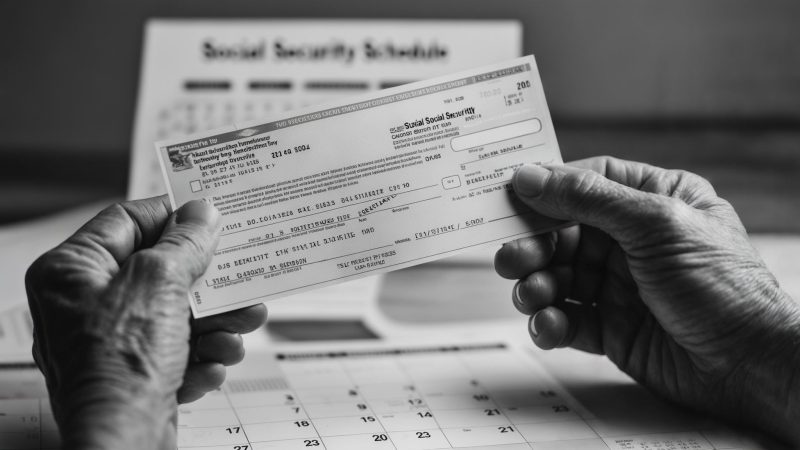
Social Security retirement payments follow a schedule determined by the recipient’s date of birth. Terrence, born in October, would receive payments on the third Wednesday of each month if he files at full retirement age. The payment date structure works as follows:
- Birthdays on the 1st through 10th: payment arrives on the second Wednesday of each month
- Birthdays on the 11th through 20th: payment arrives on the third Wednesday of each month
- Birthdays on the 21st through 31st: payment arrives on the fourth Wednesday of each month
- Beneficiaries who began receiving benefits before May 1997 receive payments on the 3rd of each month, regardless of birthday
The timing distinction matters more than most people expect. Terrence, who manages his mother’s finances alongside his own, told me he’d need to build a month around that payment date — budgeting utilities, medication refills, and his own quarterly estimated tax payments around a fixed Wednesday.
The Turning Point: A Number That Is Both Clarifying and Hard
When I asked Terrence what changed after he finally opened that statement, he paused again — this time differently, more deliberate. “I thought not knowing was protecting me from something,” he said. “But actually it was just making me invent worse numbers in my head.”
The $1,240 figure was sobering. It is, by almost any measure, a tight monthly income for a single person in California, where Terrence has lived his entire adult life. It would not cover rent in Fresno’s current market on its own. It does not account for Medicare premiums, which are deducted directly from Social Security payments and which — based on 2025 standard rates — run $185 per month for Part B alone. That would leave Terrence with roughly $1,055 before any other expenses.
What lifted, though — and Terrence said this directly — was the garnishment fear. Learning that his private consumer debt almost certainly could not touch his Social Security payments under federal law gave him something back. “That was the thing keeping me up,” he told me. “Not the number. The idea that even the number wasn’t really mine.”
Where Terrence Stands Now — and What He’s Still Facing
I want to be careful not to wrap this story too neatly. Terrence Peralta at 54 is in a genuinely difficult financial position. He has no employer-sponsored health insurance, carries his mother on a plan he pays for himself, and has been navigating the ACA marketplace since 2021. He has no 401(k), no IRA, no investment account of any kind. His Social Security benefit, whenever he claims it, will almost certainly be his primary income in retirement.
He is also, as he described himself, a methodical planner. Since our conversation, he told me he’s created a spreadsheet tracking his projected benefit at each filing age, his estimated Medicare deductions under current Part B rates, and a rough monthly budget built around the $1,240 figure. He hasn’t solved anything. But he’s mapped the terrain.
He also told me something that I keep returning to. When I asked what advice he’d give to someone in their late 40s who hadn’t looked at their statement yet, he shook his head slightly. “I’m not the person to give advice,” he said. “I’m the person who waited until 54 to look. All I can say is — the number is real whether you look at it or not. At least if you look, you can start thinking.”
That’s not a resolution. Terrence still has thirteen years of work ahead of him before full retirement age, still carries debt, still has no safety net beyond the Social Security system he’s paid into imperfectly and inconsistently for two decades. What he has now is information — specific, dated, attached to his name in a federal database. For someone who told me he loses sleep over variables he can’t control, the act of converting an unknown into a known number turned out to be the thing he needed most.
According to SSA’s retirement benefits page, workers can access their projected benefit estimates at any time through the My Social Security portal. For people like Terrence — freelancers, caregivers, workers with interrupted earnings histories — that number will often be lower than the national average. But it will be real. And real, it turns out, is something you can work with.
Sloane Avery Wren is a Senior Benefits Writer at The Daily Check covering Social Security, COLA changes, and payment schedules. This article is reported narrative journalism and does not constitute financial, legal, or benefits advice.
Related: She Paid Into Social Security for 30 Years — Now Her Disability Check Falls $800 Short Every Month
Related: A Factory Worker With $0 Saved for Retirement at 59 Is Counting on Social Security — The Math Is Brutal
.pvv-faq-section details summary::-webkit-details-marker{display:none}.pvv-faq-section details summary::marker{display:none;content:””}.pvv-faq-section details[open] summary .pvv-faq-arrow{transform:rotate(90deg)}



Leave a Reply