
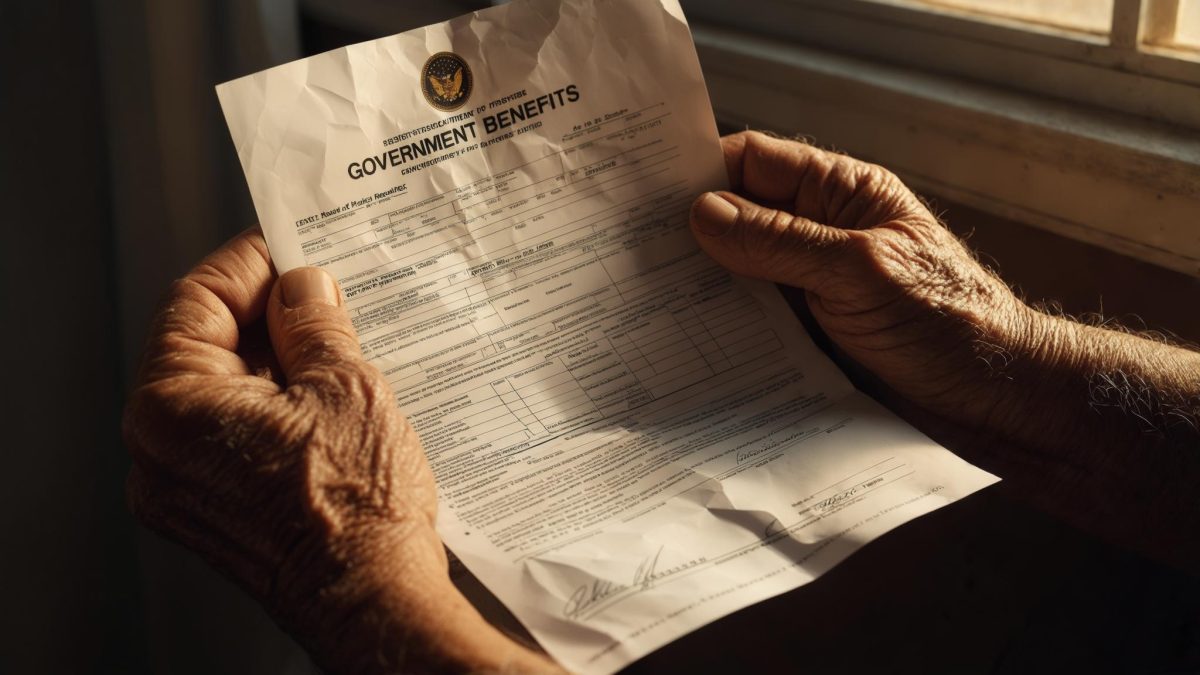
Roughly 40% of first marriages in the United States end in divorce, and according to data from the Social Security Administration, divorced workers in their mid-40s are among the most financially vulnerable when it comes to retirement readiness. They have enough working years behind them to feel settled — and enough ahead to feel the weight of every missed dollar. Tommy Bianchi knows that tension exactly.
I met Tommy at a diner off I-10 in Phoenix on a Tuesday morning, before his first service call of the day. He had his SSA earnings statement folded in his jacket pocket. He pulled it out before we even ordered coffee.
The Numbers That Started the Conversation
Tommy Bianchi earns roughly $68,000 a year as an HVAC technician. On paper, that sounds stable. In practice, $1,600 a month in child support eats approximately 28% of his gross income before a single bill is paid. Add in the credit card minimums on the $22,000 he put toward divorce attorney fees, and Tommy says he clears about $2,100 a month after all fixed obligations.
He rents a two-bedroom apartment in Tempe for $1,450 a month. The math, he told me, barely works — and only if nothing goes wrong.
When his annual Social Security statement arrived in the mail last fall, Tommy said he almost threw it away. He had never paid much attention to those notices before. This time, something made him open it.
What the SSA Statement Actually Showed Him
The Social Security Administration mails or makes available online an annual earnings statement for workers who are 60 and older, and provides online access via my Social Security for workers of all ages. Tommy, at 46, had set up an online account a few years back but never checked it. The statement he received reflected his full earnings history.
What it showed was a projected monthly retirement benefit of approximately $1,840 at full retirement age (67 for those born in 1979), based on his current earnings trajectory. That figure assumes his income stays roughly flat until retirement — no major raises, no gaps in employment.
Tommy told me he spent two hours that night doing rough math on what $1,840 a month would actually cover in 2026 dollars, let alone adjusted for inflation two decades from now. He described it as a quiet kind of panic — not dramatic, but persistent.
The COLA Question He Hadn’t Considered
Part of what I wanted to understand in speaking with Tommy was whether the recent Cost-of-Living Adjustment announcements had registered for him at all. The SSA announced a 2.5% COLA increase for 2025, following a 3.2% adjustment in 2024. For current beneficiaries, the 2025 increase added roughly $49 to the average monthly retirement check, bringing the average benefit to approximately $1,976 per month, according to SSA’s 2025 COLA fact sheet.
Tommy had heard the term “COLA” but associated it loosely with retirees — not with himself. When I explained how COLA adjustments compound over the years between now and when he’d collect, he leaned back and said he’d never thought about it that way.
“I guess I always figured Social Security would be something I worried about when I was older,” he told me. “But then I’m looking at this statement and realizing — the decisions I’m making right now, the hours I work, whether I take a second job — all of that is building toward that number. Or not building toward it.”
The Weekend Problem Nobody Talks About
Tommy sees his two kids — ages 9 and 13 — every other weekend. Those 48-hour windows are, by his own admission, where his financial discipline completely breaks down. He described taking them to Top Golf, ordering DoorDash three meals in a row, buying whatever shoes or gear they asked about in passing. He knows it. He can’t seem to stop it.
He estimates those weekends cost him between $300 and $600 each month — money that, over a year, represents roughly $4,800 to $7,200 that could theoretically go toward his legal debt or a future down payment. Tommy knows the math. Knowing it and changing it are different things, and he was honest enough with me not to pretend otherwise.
The house he lost in the divorce settlement was a three-bedroom in Chandler. He and his ex had built roughly $80,000 in equity over seven years. That equity went into the settlement. He walked away with his truck, his tools, and the debt from the attorneys.
Where He Stands Now — and What Remains Unresolved
When I asked Tommy what, if anything, had changed since he opened that SSA statement, he paused for a long time. He said he’d started actually logging into his my Social Security account, something he’d never done before. He checked his earnings history and confirmed that his wages were being recorded accurately each year — something he hadn’t thought to verify.
He still hasn’t started saving for a down payment. He doesn’t expect to qualify for a mortgage at his current debt-to-income ratio. His debt from the divorce attorneys is unlikely to be paid off entirely for another three to four years at minimum, even if he makes consistent payments. And child support continues at the same rate until his younger child turns 18 — roughly nine more years.
The projected retirement benefit on his SSA statement — $1,840 at 67 — sits in the back of his mind now in a way it never did before. He described it not as motivation, exactly, but as a specific, concrete number in a life that currently has very few of those working in his favor.
I left the diner before Tommy did. He had a service call — a broken AC unit in a Scottsdale office building, the kind of job that keeps him steadily employed even as everything else feels unsteady. He tucked the SSA statement back into his jacket pocket when we were done. I asked why he kept it there. He said he wasn’t sure yet. Maybe to remind himself that there’s still something being built, even when it doesn’t feel like it.
It was not a triumphant ending. Tommy Bianchi is not out of debt, not in a house, and not close to resolving the financial wreckage of a marriage that ended badly. But he is paying attention now — to numbers, to records, to a future that is still technically arriving whether he watches for it or not. For some people, that awareness arrives too late. For Tommy, at 46, it arrived over a folded piece of paper in a diner off I-10, right before his first cup of coffee.




Leave a Reply